Mount Union borough
Mount Union's Powder Plant
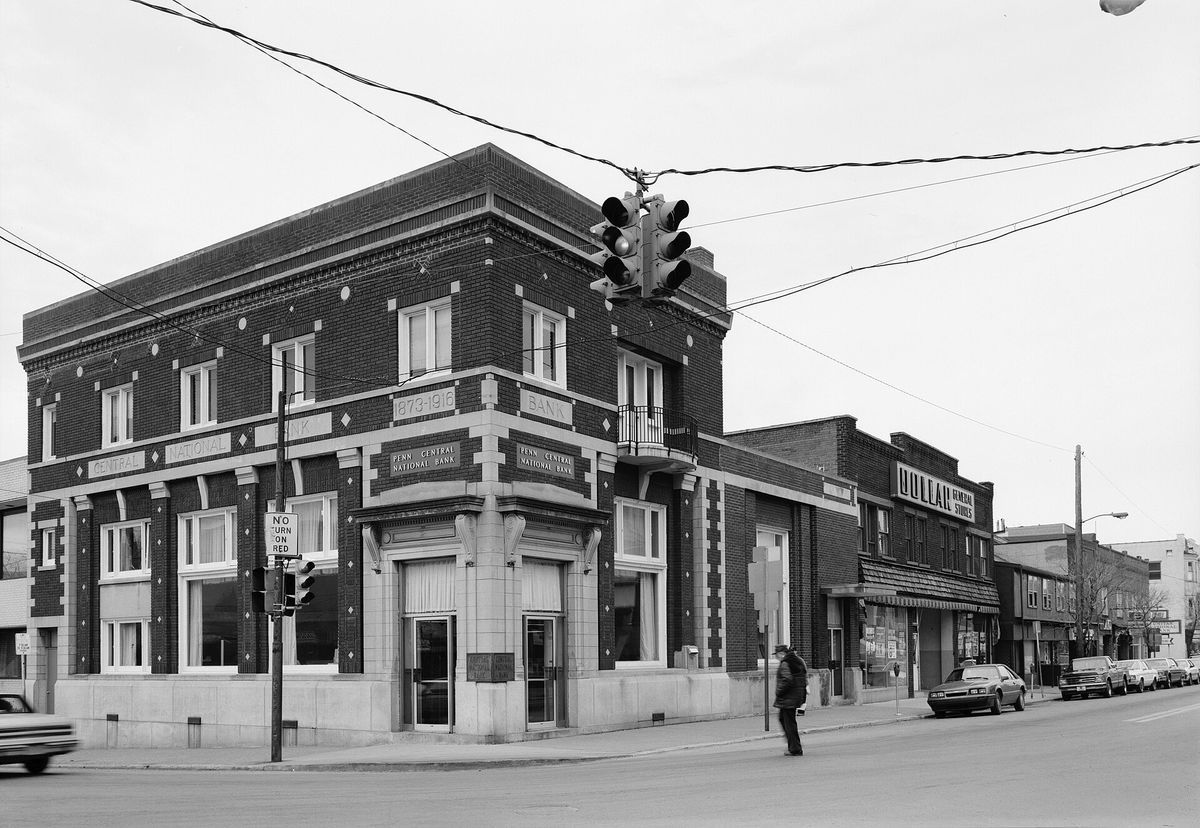
Did you know? Mount Union was a First World War boomtown. In 1915 the Aetna Explosives Company opened a powder plant just across the river from the town. In July 1915 the Harrisburg Telegraph reported that the new plant, then being rushed to completion, was to make powder and shells for the Allies. On August 7 the paper said the company expected to be making powder there by August 15, with more than 1,000 men employed.
A 1991 National Park Service survey says the plant stood in the river loop area east of Mount Union. The sources differ on whom it served. The survey says that before the United States entered the war, the factory produced gunpowder "for the use of various European armies in the fight against Germany." The National Register nomination for the town's historic district calls the plant federally sponsored. And on July 29, 1916, the Telegraph reported that the company had received an order for 5,000,000 pounds of smokeless powder for the United States government, to be filled at Mount Union.
The Harrisburg Telegraph of October 2, 1916, reported that the company had about stopped making powder and that about one hundred men remained at the plant. The shutdown was said to be for repairs and the installation of safety devices, and the men let go were told they would be sent for when operations started again in several months on a larger scale. The item ran twelve days after a September explosion at the plant had killed six men. On November 21 the Telegraph reported the superintendent's announcement that the plant, closed since October, would soon be running again, with at least 1,500 men employed within several weeks.
The plant ran twenty four hour shifts until it closed at the end of 1918, after the armistice. The Harrisburg Telegraph of Thursday, January 2, 1919, reported that the plant had shut down on Tuesday evening and that 500 employees were thrown out of work. The National Park Service survey gives an earlier date, saying the plant officially closed its doors on November 11, 1918, with the end of the First World War. The Telegraph's Mount Union news of December 3, 1918, reported that the plant had been reorganized over the previous ten days, with the hours changed, new work cut back and surplus help eliminated, and that several hundred men had left town in the past week. The item said the closing of these plants, the Aetna works and a new government sulfuric acid plant nearby, would work no hardship on the town, since there was plenty of work for all. The Historic American Buildings Survey says it employed at least 1,000 men and women, and that the brickyards and the powder plant together employed around 3,000. The National Register nomination for the town's historic district says the plant employed hundreds of workers in round the clock shifts.
After the plant closed, it was offered for sale. The Lake County Times of Hammond, Indiana, reported on September 5, 1919, that the Aetna plants, the one at Mount Union among them, had been advertised for sale. In June 1921 newspapers reported that Hercules Powder had taken over the properties, assets and business of the Aetna Explosives Company. The National Park Service survey says the Mount Union land was sold to Hercules Powder, but the list of plants printed in the Evening Journal of Wilmington, Delaware, does not include Mount Union. The survey says Hercules then sold the land and buildings, and that a few storage buildings, an uncompleted ordnance building and several company houses still remained at the site near Silverford Heights in 1991.
The Historic American Buildings Survey says the munitions jobs paid well but were dangerous and short term. They drew mostly single men from a wide radius around Mount Union, and the company built a few single family houses for its managers and several two and three story barracks style buildings for the rest of its employees.
Before the war, the nomination says, Mount Union's population had been relatively homogeneous. The influx of thousands of new workers drawn and recruited to the Aetna plant changed the ethnic and racial face of the town, bringing eastern and southern Europeans and African Americans.
Within a decade, the nomination says, certain areas of the town had earned a regional reputation for "racketeering," as the local writer James T. McElroy described things in 1930. The Historic American Buildings Survey calls it a local reputation and gives the phrase as "a racketeering borough ... a second Sodom and Gomorrah."
Sources
- National Register of Historic Places nomination: Mount Union Historic District, reference 94000516
- Historic American Buildings Survey / Historic American Engineering Record, PA2822: Town of Mount Union
- Harrisburg Telegraph, 14 July 1915, p. 2: 'Falling Stack Kills Two' (the new Aetna plant at Mount Union, being rushed to make powder and shells for the Allies)
- Harrisburg Telegraph, 20 September 1916, p. 1: 'Six Men Killed by Explosion at Mount Union' (the plant of the Aetna Explosives Company)
- Harrisburg Telegraph, 2 January 1919, p. 11: 'Powder Plant Shuts Down' (Mount Union, Jan. 2)
- Harrisburg Telegraph, 24 April 1919, p. 13: state contracts awarded to the Aetna Explosives Company, New York
- National Park Service, America's Industrial Heritage Project, Juniata River Corridor reconnaissance survey, September 1991, page 76: 'Site of Aetna Powder Plant'
- Harrisburg Telegraph, 2 October 1916, p. 2: Powder works closes down
- Harrisburg Telegraph, 21 November 1916, p. 2: Powder plant to resume work
- Harrisburg Telegraph, 3 December 1918, p. 2: Mt. Union feels ending of war
- Harrisburg Telegraph, 17 January 1919, p. 2: Aetna Explosive Co. plant offered for sale
- Lake County Times, Hammond, Indiana, 5 September 1919, p. 6: Aetna plants advertised for sale
- Evening Journal, Wilmington, Delaware, 8 June 1921, p. 1: Hercules takes over Aetna Co.
- Evening Journal, Wilmington, Delaware, 8 June 1921, p. 8: list of plants Hercules acquires
- Telegraph-Courier, Kenosha, Wisconsin, 9 June 1921, p. 1: Hercules takes over Aetna Explosives Co.
- Harrisburg Telegraph, 7 August 1915, p. 5: 'Mt. Union Powder Plant to Start Up' (first explosives August 15, more than 1,000 men)
- Harrisburg Telegraph, 29 July 1916, p. 7: '5,000,000-Pound Order for Powder for U. S. Government'
Checked 2026-11-01 · County histories and primary sources, read in full
← All stories from Mount Union borough
Have something to add to this story, or a photograph of it? Send it here →
Photographs from Mount Union borough

More from Mount Union borough
Two early stone houses in Mount Union have both been called the oldest, each within its own place. Charles Howard…
Mount Union borough, A Book of Poems, 1909Before he wrote his history of Mount Union, Charles Howard Welch brought out a book of poems. The title page reads A…
Mount Union borough, A Police Escort Home From WildwoodIn March 2015 the Huntingdon Daily News told readers about Darkhorse Percussion, an independent indoor percussion group…
Also about County history
The Captain Jack story appears in print in Samuel Hazard's Register of Pennsylvania in December 1829. At first the man…
elsewhere in the county, The county poor house on the Leas farmAn act of 6 May 1850 provided for a county house for the employment and support of the poor. It named eleven…